Is Dario Amodei’s AI-safety oversight plan really a form of communism? Not literally—he isn’t proposing state ownership or a planned economy—but handing frontier-AI oversight to an insular network of ideologically-aligned evaluators reveals the same instinct: a small circle of credentialed insiders deciding, on everyone else’s behalf, what risks the public may take.
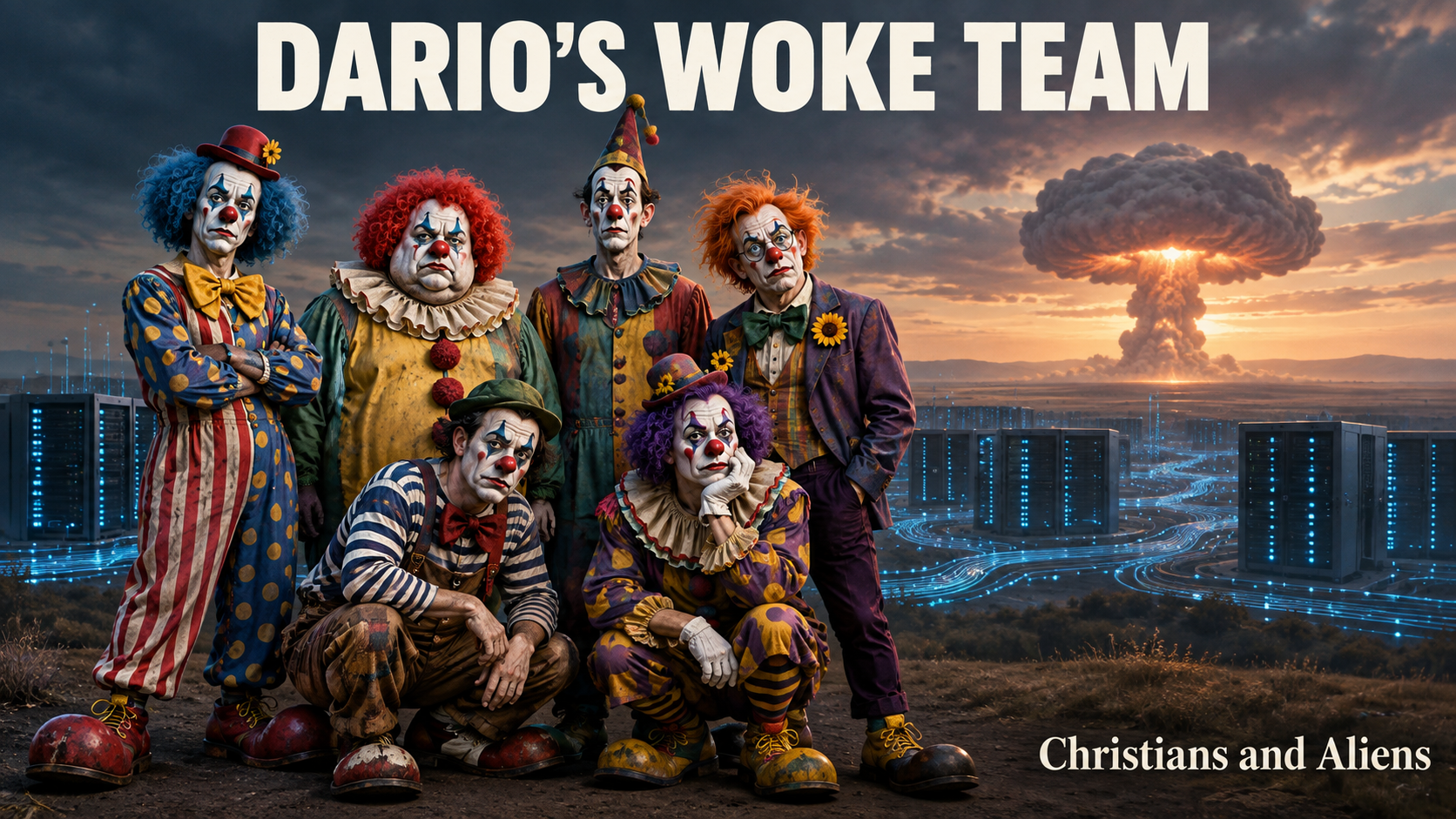
The New York Post’s account of Anthropic CEO Dario Amodei’s proposed AI-safety oversight network raises a blunt question: when AI’s leaders claim their systems may create a crisis beyond ordinary human control, why is their answer another insulated network of ideological insiders? The article portrays Amodei’s preferred outside evaluator, Model Evaluation and Threat Research (METR), as deeply connected to the Effective Altruism world, Anthropic’s investors, and the same alignment-research community it is supposed to scrutinize. Meet Anthropic CEO Dario Amodei’s handpicked super-woke globalists
Is Communism Really the Only Answer? Dario’s Proposed Overseers
Amodei has argued that frontier AI companies should allow “embedded third-party evaluators” to obtain employee-like access and assess whether the most powerful systems are being developed safely. The New York Post reports that the organization positioned for this role is METR, an AI-evaluation nonprofit with roots in the Effective Altruism ecosystem and institutional links that critics say make its claimed independence hard to take seriously. Amodei’s proposal for embedded evaluators
The question is not whether every person at METR shares identical politics, private beliefs, or personal identity. The more serious question is structural: Why should the public accept an oversight body that emerges from the same small elite network of AI labs, donors, researchers, and ideological movements whose assumptions have shaped the AI race in the first place? A watchdog that depends on the same ecosystem it evaluates may offer expertise, but it does not automatically offer independence.
This is why Perry Metzger’s criticism, quoted in the article, cuts through the public-relations language: auditing an institution through people who came from its own ideological and professional circle resembles a bank being examined by its former employees. It may look like oversight on paper while functioning as controlled dissent inside a closed system. Criticism of METR’s independence
 Must See Also: AI COULD KILL US ALL: Why an Anthropic Researcher’s Exit Echoes a Darker Warning
Is Communism Really the Only Answer? The Meaninglessness Problem
There is an uncomfortable appropriateness to the people selected for this task—not because their identities should decide the debate, but because the arrangement symbolizes the likely weakness of the entire project. If AI becomes as powerful and disruptive as Amodei himself warns, then a nonprofit evaluator with privileged access, disclosure forms, internal reports, and advisory authority will not control the companies building the systems, the investors financing them, or the governments that will respond when jobs and institutions begin breaking under the pressure.
The New York Post reports that Amodei warned advanced AI could dominate the internet within six to twelve months without safeguards, creating enormous financial damage. Yet the remedy on offer is not democratic accountability, a clear public legal framework, or a meaningful limit on concentration of technological power. It is an evaluator class operating close to the firms it watches. Amodei’s AI-risk warning and proposed remedy
That gap matters. If the danger is truly civilization-scale, then ceremonial “independence” cannot be enough. A tightly connected group of experts may be able to identify risks, write reports, and advise executives. But it cannot solve the fundamental issue: a few corporations and affiliated institutions are rapidly acquiring extraordinary influence over work, information, security, and the definition of acceptable public policy.
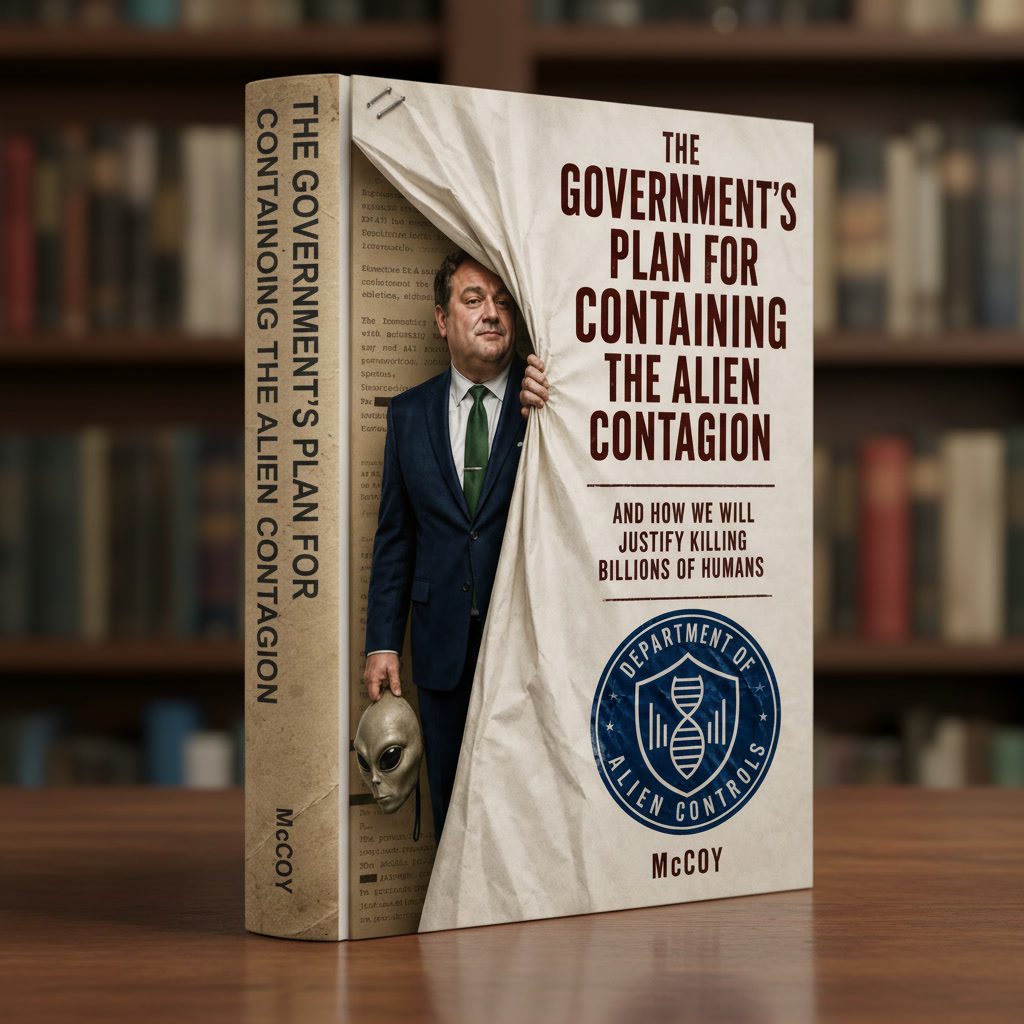
The Government’s Plan to Contain the Alien Contagion makes a parallel fictional warning. Its AI-overpopulation framework imagines a society in which automation eliminates large amounts of productive work and political leaders decide the resulting dependency and unrest must be centrally managed. The book’s concern is not that expertise itself is evil. Its concern is that emergency language, technical expertise, and supposedly humane management can become the vocabulary through which unaccountable power expands.
 Must See Also: AI Job Apocalypse and Alien Contagion: Why Overpopulation from AI is the Government’s Real Crisis
Is Communism Really the Only Answer? What Dario’s Plan Implies
“Communism” is often used loosely as a label for any policy someone dislikes. But its more relevant meaning here is the concentration of decision-making power: the belief that a central group of planners, credentialed experts, and morally approved institutions should decide how society’s resources, risks, labor, information, and future are managed.
Amodei is not literally calling for communism. The article does not say he is proposing abolition of private property, state ownership of industry, or a centrally planned economy. Anthropic remains a private company, supported by private capital, competing in a commercial AI market. It is important not to claim more than the evidence shows.
But the proposal does reveal a troubling managerial instinct. If AI is expected to remove large portions of the workforce, dominate the internet, reshape national security, and create risks too large for ordinary citizens to assess, then who will be trusted to decide what happens next? In the model described by the article, the answer appears to be a network of specialized institutions with privileged access and the authority to define safety for everyone else. METR’s role and the broader regulatory dispute
That is the real warning embedded in Dario’s plan. The group may be almost meaningless as a restraint on the companies and systems it supposedly oversees. Yet it may be highly meaningful as a precedent: an elite safety bureaucracy that normalizes the idea that ordinary people must surrender judgment to people who claim to understand existential risk better than they do.
The Government’s Plan to Contain the Alien Contagion dramatizes this danger through its fictional Department of Alien Controls. In the book’s scenario, authorities convert a perceived biological and social emergency into a permanent apparatus of status tracking, restricted movement, centralized messaging, controlled worship, and algorithmic enforcement. The book’s stated warning is that the most sweeping controls are rarely introduced as tyranny; they are introduced as safety, responsibility, compassion, and expert necessity.
 Must See Also: Alien Encounter Control Outline
Is Communism Really the Only Answer? AI, Dependency, and Control
The deepest problem is not whether a particular evaluator uses the correct political vocabulary. It is the trajectory created when the people building AI simultaneously tell the public that AI may make vast numbers of people economically unnecessary, while proposing elite-administered systems to manage the dangers that follow.
Anthropic’s own CEO has previously warned that AI could erase half of entry-level white-collar jobs and drive unemployment as high as 10 to 20 percent within one to five years, a forecast that has been widely debated but cannot simply be dismissed because it comes from a leader of the very industry driving the change. Anthropic’s “white-collar bloodbath” warning
If those warnings prove even partly correct, societies will face choices that are moral, economic, spiritual, and political—not merely technical. Will families be treated as people with inherent dignity, or as costs and risks to be administered? Will citizens retain the ability to challenge those who govern them, or will “AI safety” become a permanent justification for credentialed managers to decide which views, occupations, transactions, and movements are acceptable?
That is where The Government’s Plan to Contain the Alien Contagion becomes relevant. The book argues that the real danger of an AI-driven crisis is not simply technological unemployment. It is the temptation to redefine people who are no longer economically useful as burdens to be managed, monitored, segregated, or discarded. Its fictional scenario asks readers to recognize the pattern before an emergency is used to make extraordinary control sound inevitable.
Dario Amodei may not be telling the world that communism is the answer. But after careful consideration, his preferred solution appears to be an even more concentrated version of the system already producing the risk: powerful private AI firms, allied donors, specialized nonprofits, trusted evaluators, and a public expected to accept their conclusions because the future is supposedly too dangerous to debate openly.
That is not a real answer to AI’s social consequences. It is a warning that the people who fear an AI apocalypse may be preparing the public to accept a managed society long before any apocalypse arrives.
 Must See Also: Brace Yourselves for the Governmental Control Super Storm