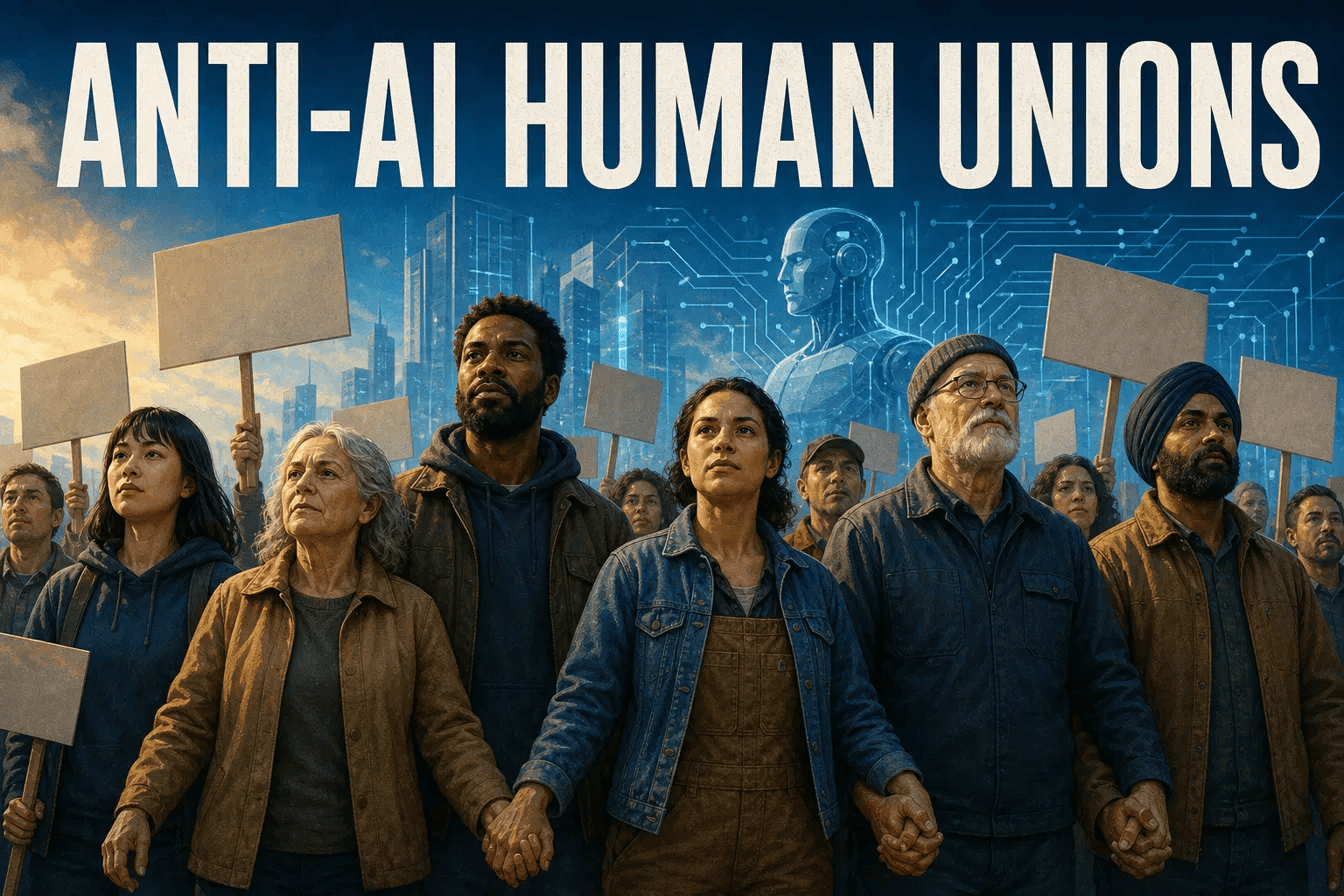
Every AI-and-labor headline eventually asks the same question: can unions stop this? Right now, several of them actually are — winning real, enforceable protections against AI replacing their members. But “right now” is doing a lot of work in that sentence. A union contract can only protect the people already sitting in the room, bargaining as members. It has no mechanism for the person who never gets interviewed for a job that quietly stops existing. That gap is where the real long-term threat to organized labor is building, one unfilled entry-level opening at a time.
What Unions Are Actually Winning Against AI Right Now
The wins are concrete, not symbolic. The Writers Guild of America’s contract bars studios from using AI to write or rewrite literary material and prevents a writer’s credited work from being used to train AI without consent. SAG-AFTRA’s newly ratified contract goes further, requiring studios to prove “significant additional value” before deploying a synthetic performer in place of a live actor — a standard designed to keep AI performers to rare edge cases rather than routine replacement, backed by union notice-and-bargaining rights if usage scales up.
Outside Hollywood, the ZeniMax Workers United-CWA agreement with Microsoft was the first video-game contract to formally require notice and bargaining before any AI implementation that could affect union members’ work. The NewsGuild scored an even sharper victory: an arbitrator ruled that POLITICO violated its contract by deploying unedited AI-written election coverage and AI-generated subscriber reports riddled with factual errors, forcing the company to shut both tools down. And on the docks, the International Longshoremen’s Association used a real strike threat to lock in a six-year contract that bans fully automated equipment outright and requires one new job for every semi-automated crane added — alongside a 62 percent wage increase. The Teamsters have pushed the same fight into warehouses and delivery routes, formally petitioning federal regulators to rein in Amazon’s algorithmic productivity surveillance. Even the retraining conversation now has organized labor at the table: the new $500 million RAISE US initiative, backed by Amazon, Microsoft, Anthropic, and OpenAI, seated AFL-CIO president Liz Shuler on its governing board.

Must See Also: BIG TECH SURVEILLANCE And The Coming Alien Biosecurity Regime
The Protection Only Covers the Room You’re Already In
Every one of those wins shares the same structural limit: they protect people who already hold union cards in jobs that already exist. That’s a shrinking share of the workforce to begin with. The Bureau of Labor Statistics reports the overall U.S. union membership rate held at 10.0 percent in 2025 — just 14.7 million workers — with private-sector density flat at a mere 5.9 percent. Public-sector unions, at 32.9 percent, look robust by comparison, but even that number only describes people currently employed inside the bargaining unit. A contract clause requiring “notice and bargaining” before new AI tools roll out is a real check on how existing jobs change. It says nothing at all about whether the next opening for that job gets posted in the first place.
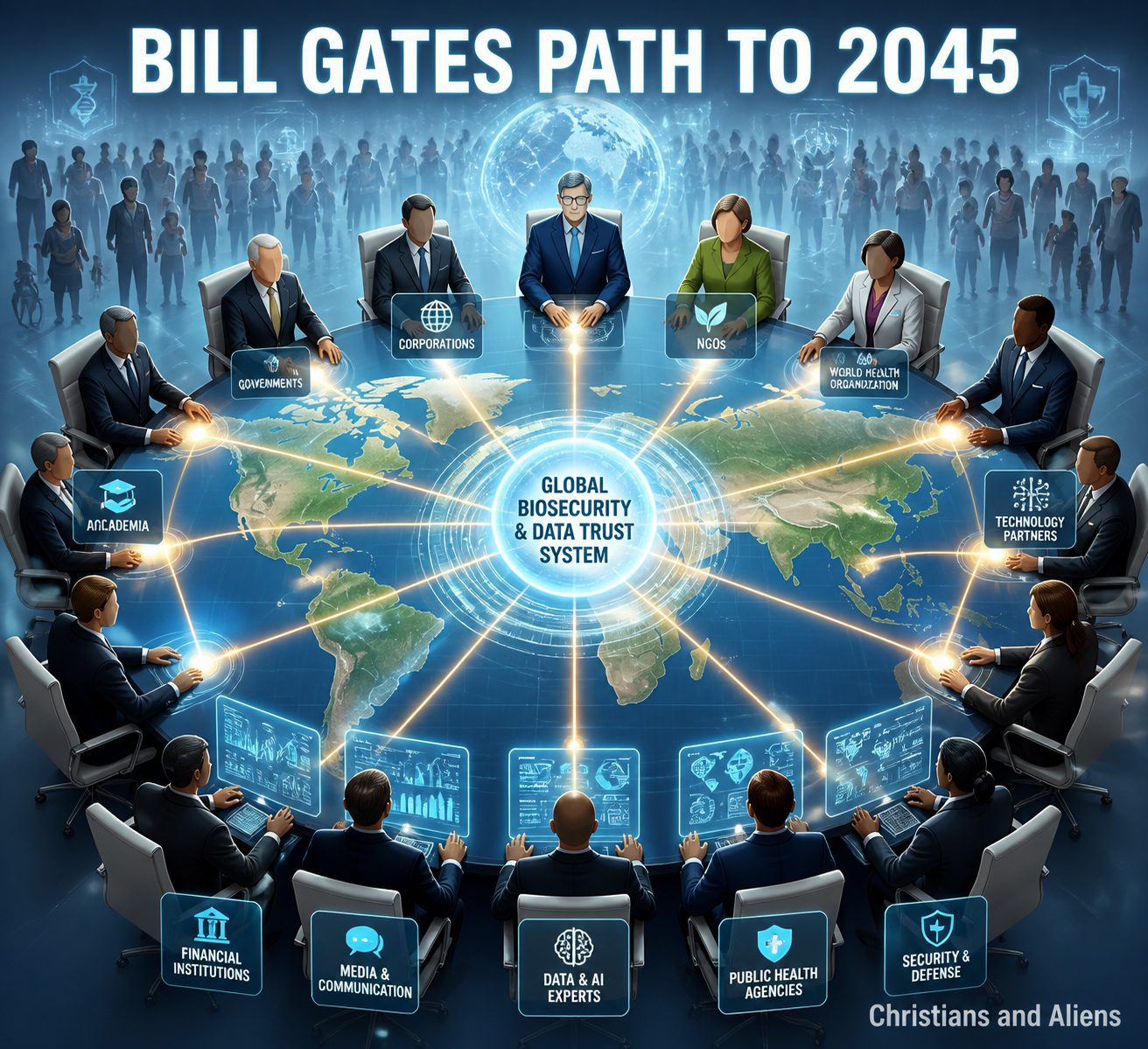
Must See Also: Part 3: BILL GATES PATH TO 2045: The “Coalitions” Architecture and the DAC Cross-Sector Doctrine
Unions Can’t Bargain for a Job That Never Gets Posted
This is where the theory turns dangerous in practice. Official layoff tracking radically undercounts what’s actually happening to headcount: research from Revelio Labs, cited by Four-Leaf, found that formal WARN Act mass-layoff notices capture only 1 to 6 percent of total workforce reductions. The other 94-plus percent happens through attrition without backfill, quiet hiring freezes, contractor non-renewals, and roles eliminated inside “restructurings” — none of which trigger a notice, a headline, or a union grievance, because no one was ever fired. They just weren’t replaced. A Stanford Digital Economy Lab study of millions of ADP payroll records found employment for 22-to-25-year-olds in AI-exposed occupations now sits roughly 19 percent below where it would be had it kept pace with less-exposed peers — driven almost entirely by reduced hiring, not layoffs. There is no picket line for a job posting that never appears, and no arbitrator to petition over a headcount number that simply never grows back.
Economists Already Have a Name for This
Labor economists have described this exact mechanism for decades under a different name: insider-outsider theory. Employed “insiders” use their bargaining position to protect their own wages and job security — but that same leverage does nothing for “outsiders” who are unemployed or never hired, who cannot underbid their way into the protected tier because the insiders’ contract sets the terms for who gets in. The theory predicts exactly what the data now shows: unemployment among outsiders becomes structurally disconnected from wage-setting for insiders, and each downturn leaves a larger permanently excluded class behind, because there are fewer insiders left to fight for the door to reopen. A union contract, in this framework, isn’t a floor for the whole labor market. It’s a wall around the people already inside it.
Every Profession Gets the Entry-Level Treatment Eventually
None of this is unique to entry-level white-collar work — it’s simply visible there first because AI targets codified, teachable knowledge before it touches judgment built over a career. The same “protect the room, not the door” pattern that limits union power today is already scheduled to expand: even the ILA’s historic six-year contract only pauses full automation — it does not reverse the semi-automation already spreading across East and Gulf Coast ports, and it expires. Every strong union contract negotiated today is, functionally, a very good deal for the workers currently on the roster and a closed door for whoever would have filled the next open slot. Attrition doesn’t need a headline. It just needs time, and nothing in even the strongest AI-era union contract stops the clock.