Did Barack Obama say aliens are real? Yes, in a lightning-round answer he said aliens “are real,” then immediately clarified he meant it statistically, had seen no evidence of contact, and that none are held at Area 51. The book argues this pattern — public denial paired with quietly expanding preparedness programs — is exactly how officials would handle real disclosure.
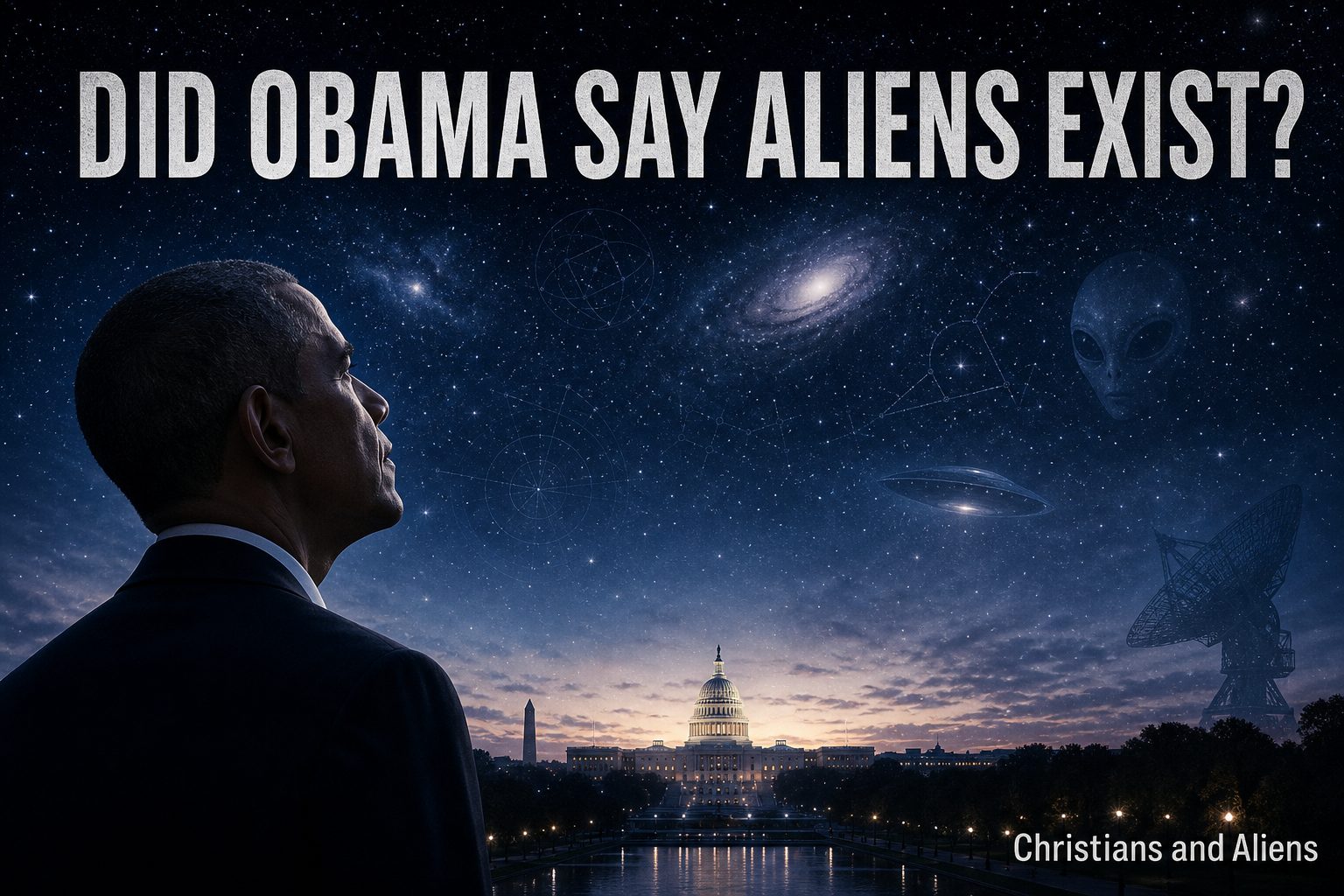
Did Obama Say Aliens Exist? What He Actually Told PBS
According to the PBS NewsHour coverage of his recent podcast appearance, Barack Obama was asked in a lightning‑round question, “Are aliens real?” and replied, “They’re real,” before immediately adding that he hasn’t seen them and that they are not being housed at Area 51. After social media exploded over the “they’re real” sound‑bite, Obama clarified in a follow‑up statement that he was speaking statistically: given how vast the universe is, he believes the odds are good that some kind of life exists somewhere out there, but he has personally seen no evidence that aliens have contacted humanity or that the US government is hiding them. In that clarification, he emphasized that during his presidency he saw “no evidence” that extraterrestrials “have made contact with us,” directly pushing back on the idea that a president secretly confirmed alien visitors.
In “The Government’s Plan to Contain the Alien Contagion,” the very first chapters warn that officials will publicly deny direct alien contact while still using the idea of an alien threat to justify surveillance, emergency powers, and biosecurity measures behind the scenes, a pattern that fits Obama’s careful distinction between hypothetical life “out there” and the official line that nothing has happened “here.” In that book, government spokespeople insist there is “no confirmed contact,” even as classified programs quietly expand under the banner of “preparedness” and “resilience,” mirroring how Obama reassures the public about the absence of hard evidence while the broader security state continues to grow.
Must See Also: BIG TECH SURVEILLANCE And The Coming Alien Biosecurity Regime
Did Obama Say Aliens Exist? Jokes, Statistics, And Official Denials
The PBS piece notes that Obama framed his comments as part of a fun “speed round” with podcast host Brian Tyler Cohen, making clear later that his “they’re real” answer was meant in that playful, hypothetical context. In his Instagram clarification, he explained that because the universe is so vast, it is statistically plausible that life exists elsewhere, but that the distances between solar systems make it very unlikely that aliens have actually come here, and he reiterated he had seen no proof as president. In other words, he affirmed a possibility grounded in probability, not a revelation of secret files; his core message to PBS and other outlets was that there is no official evidence of aliens making contact with Earth.
In “The Government’s Plan to Contain the Alien Contagion,” the government playbook repeatedly separates public messaging from classified assessment: officials speak in vague “statistical” terms about possibilities in the universe while preserving absolute deniability about “contact” or “contagion” events on Earth. The book describes press conferences where leaders stress that “current evidence shows no confirmed alien infection” even as they quietly authorize containment drills, biotechnological monitoring, and international emergency frameworks—exactly the kind of split‑screen communication we see when Obama jokes about aliens but then assures viewers that he saw no corroborating evidence in the Oval Office.
Must See Also: The Coming Alien Biosecurity Regime
Did Obama Say Aliens Exist? How His Comments Mirror The Book’s Contagion Plan
Coverage of Obama’s remarks highlights how quickly a single playful line—“They’re real”—can trigger global speculation, forcing a former president to clarify that he found no documents, no hidden facilities, and no proof that extraterrestrials are being stored at places like Area 51. In the PBS summary and related reports, Obama almost sounds exasperated as he repeats that, absent a “massive conspiracy that even the president…is unaware of,” there is no official evidence backing the more sensational alien narratives. That repeated insistence on “no evidence during my presidency” is a textbook example of how modern leaders calm public anxiety: acknowledge what people are curious about, then pivot to the reassuring claim that the institutions in charge have seen nothing that requires civilians to panic.
In “The Government’s Plan to Contain the Alien Contagion,” this pattern is central to the strategy: the public is told there is “no evidence” of an active alien contagion, even as governments quietly prepare quarantine protocols, digital surveillance grids, and emergency laws that could be switched on the moment a threat is declared. The book explains that official denials are not necessarily proof that nothing is happening; they are part of the containment design, meant to keep citizens compliant and calm while systems of control are built around them in case an alien pathogen—or even the fear of one—becomes useful to the regime. Obama’s careful phrasing about probabilities, distances, and the absence of confirmed contact lines up eerily well with the communication style the book predicts: steady, reasonable, and always leaving just enough ambiguity for future “discoveries” to justify new controls.
Must See Also: Why Governments Fear Alien Contact
Did Obama Say Aliens Exist? What It Means For Christians And Alien Contagion Fears
For Christians trying to make sense of the PBS report and Obama’s comments, the key point is that no president—even a former one—is claiming documented alien visitors; instead, he is acknowledging what many scientists already say, that life somewhere is statistically likely while insisting that we have no verified contact here on Earth. From a Christian worldview, as discussed on ChristiansandAliens.com, this distinction matters because it keeps speculation about “aliens” from overshadowing the clear biblical teaching about God’s sovereignty, human responsibility, and the reality of spiritual beings already described in Scripture. It also means believers should be cautious when governments use alien language—whether about visitors or contagions—as a justification for sweeping control measures, a warning that “The Government’s Plan to Contain the Alien Contagion” drives home by showing how fear narratives can be weaponized regardless of whether actual extraterrestrials ever appear.
The book encourages readers to look beyond the headlines and ask how panic about “aliens,” “UFOs,” or “unknown pathogens” might prepare the public to accept unprecedented surveillance and restrictions in the name of safety. Obama’s PBS‑covered remarks illustrate a softer version of that process: a viral joke, a sober clarification, and a subtle reinforcement of trust in official institutions, all while the possibility of alien life remains just plausible enough to keep people watching the sky—and accepting new forms of control here on the ground.