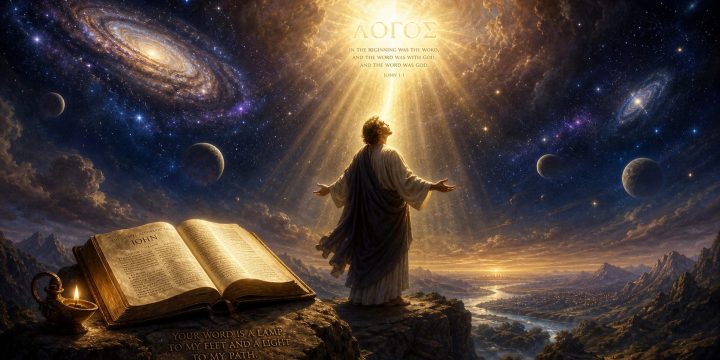
The existence of human consciousness and rational thought is among the most profound and persistent puzzles in all of philosophy. Why does subjective experience exist at all? Why can human minds perceive truth, construct logical arguments, and engage in abstract reasoning? Materialist naturalism — the dominant secular framework — struggles profoundly to answer these questions. The Christian worldview, by contrast, offers an elegant, coherent, and scripturally grounded answer: minds exist because there is a supreme Mind behind the universe, and human rationality is derivative of divine rationality. As the Apostle Paul declares in Colossians 2:2–3, all knowledge is ultimately rooted in Christ: "in whom are hidden all the treasures of wisdom and knowledge". This is the mind-first world — and consciousness and reason fit it perfectly. The Hard Problem of…
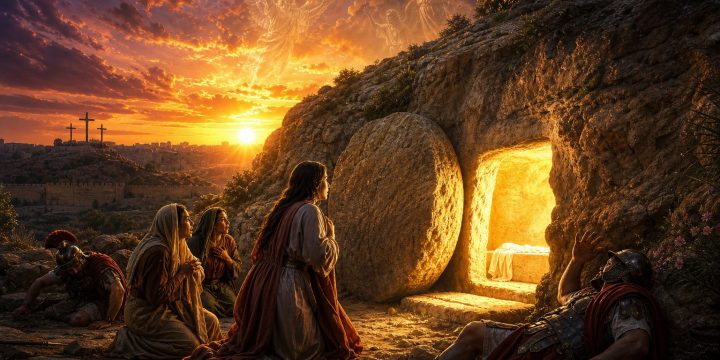
The resurrection of Jesus Christ is not merely a theological claim held by faith — it is a publicly proclaimed, historically investigated event that has withstood centuries of rigorous scholarly scrutiny. When evaluated by the same standards of evidence applied to any ancient historical question, the resurrection emerges as the most coherent explanation for a cluster of facts that even skeptical, non-Christian scholars are compelled to accept. This paper examines the historical evidence for the resurrection, the scholarly consensus across ideological lines, the failure of naturalistic alternatives, and the profound Christian Privilege of proclaiming a living Lord whose resurrection is grounded in space, time, and verifiable human testimony. As the Apostle Paul declared in the earliest creed of the Christian faith: "For I delivered to you as of first importance…
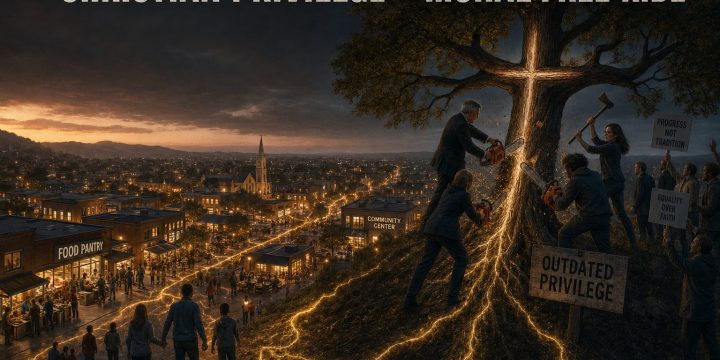
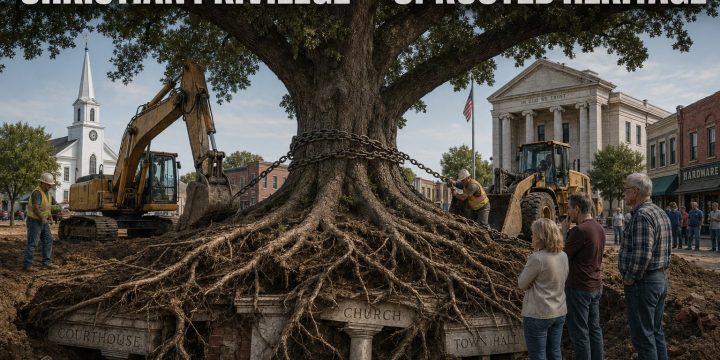
Christian Privilege and the Demand to Keep the Fruit but Cut the Tree One of the strangest features of the critique of Christian Privilege is that it often condemns Christianity as a source of public influence while continuing to rely on moral ideas that Christianity helped popularize, stabilize, and defend. The argument operates like someone denouncing a power plant while insisting the lights must remain on. Christianity is accused of excessive cultural inheritance at the very moment its critics continue spending the inheritance. That contradiction is not minor. It sits at the center of the entire debate. Modern critics of Christian Privilege regularly appeal to universal human worth, moral equality, concern for the vulnerable, conscience rights, and the duty to challenge domination. But those are not morally self-generating ideas. They came to the modern…
Christian Privilege and the Dream of a Neutral Winner The social criticism of Christian Privilege is often sold as a peace plan for a divided nation. The idea is straightforward enough: if Christianity loses its special status in public life—its assumed moral authority, cultural familiarity, and institutional influence—then the public square will become fairer, calmer, and less tribal. A single dominant identity will no longer overshadow everyone else. The temperature will drop. But this is one of the most dangerous illusions in modern public life. If the strongest version of the anti-Christian Privilege project were implemented, it would not produce neutrality. It would produce a new race for official status. Once public Christianity is framed as a problem to be contained, every other moral and political faction learns the same lesson: survival requires…
The controlling thesis of this article is straightforward: if the Christian Scriptures are true, then the central moral and political objections to Christian privilege lose much of their force, because a society is not acting irrationally or unjustly when it gives public honor, legal deference, or cultural preference to what is in fact true and good. That claim does not settle every prudential or constitutional question, and it does not justify cruelty, coercion, hypocrisy, or civil disabilities for dissenters. It does mean, however, that the modern critique of “Christian privilege” usually depends on a prior assumption that Christianity is merely one identity option among many and not the true account of God, man, sin, redemption, and public morality. That is why the order of argument matters. Critics of Christian privilege in America…
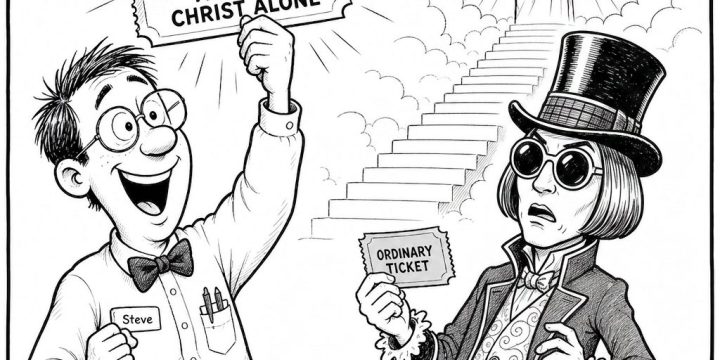
Christian Privilege Is Accepting the Real Golden Ticket When people talk about “privilege,” they usually mean advantages, status, or opportunities in this world. But there is a far greater privilege than any social, economic, or political advantage: the privilege of receiving the real golden ticket—salvation through Jesus Christ alone and the promise of eternal life. In the cartoon image, Steve realizes that what he’s holding is not a ticket to a factory or a fantasy, but to forgiveness, reconciliation with God, and everlasting joy in His presence. That picture is a powerful metaphor for what the Bible calls the gospel, the “good news” of Jesus Christ. The Golden Ticket We All Need The Bible says that every human being has the same basic problem: sin. Sin is not just “big” wrong things;…
If Christian Scriptures Are True, Don't Christians Deserve Privilege? The controlling thesis of this article is straightforward: if the Christian Scriptures are true, then the central moral and political objections to Christian privilege lose much of their force, because a society is not acting irrationally or unjustly when it gives public honor, legal deference, or cultural preference to what is in fact true and good. That claim does not settle every prudential or constitutional question, and it does not justify cruelty, coercion, hypocrisy, or civil disabilities for dissenters. It does mean, however, that the modern critique of “Christian privilege” usually depends on a prior assumption that Christianity is merely one identity option among many and not the true account of God, man, sin, redemption, and public morality. ... Read More Below…
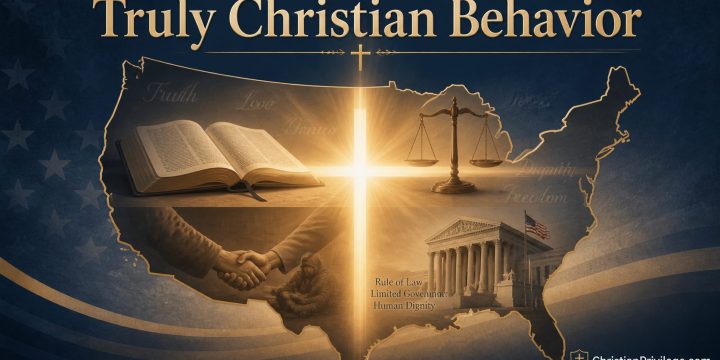
Christianity, at its core, is a faith system built on the twin commandments to love God with all one's heart and to love one's neighbor as oneself — a framework that has demonstrably shaped the most consequential nation in human history. The United States of America did not emerge from a vacuum. Its founding documents, its institutions, its culture of ordered liberty, and its eventual self-correction on historic moral failures all draw meaningfully from a Christian theological inheritance. To acknowledge this is not to claim the nation has been perfectly Christian — it has not — but rather to observe that its greatest achievements reflect Christian ideals applied faithfully, and its greatest failures reflect those same ideals abandoned or distorted. The modern critique of “Christian privilege” frames this legacy through…
A Response to the Critics of "Christian Privilege" in America Find the right tree on a hot August afternoon and you will understand something about civilization that no lecture can teach. The shade beneath a great oak is not an accident. It is the accumulated result of decades — sometimes centuries — of growth, of roots driving deep into the earth, of branches spreading wide because the seed and soil and years all conspired together in exactly the right way. You did not plant this tree. You arrived beneath it already grown. You are cool where others are not. You are sheltered where others burn. Now imagine someone standing at the edge of that shade, enjoying every benefit of it — the coolness, the breeze through the canopy, the sturdy…
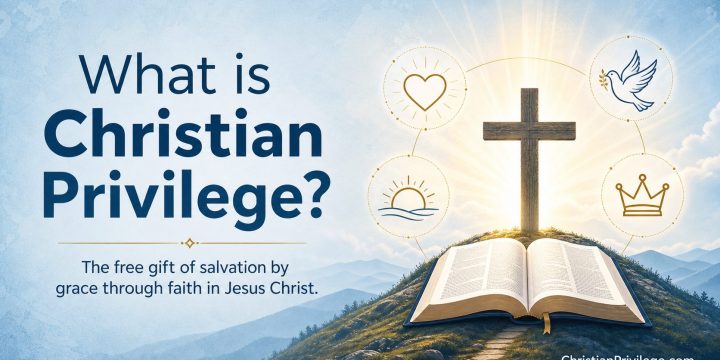
Christian Privilege, rightly understood through the lens of Scripture, is not a social construct or a cultural status symbol — it is a divine endowment. It is the extraordinary, unmerited standing granted to every believer in Jesus Christ by virtue of God's sovereign plan of salvation. This privilege originates not in human achievement, cultural dominance, or institutional power, but in the eternal will of God — a will that was set before the foundation of the world, progressively revealed through covenants and prophecy, definitively accomplished in the life, death, and resurrection of Jesus Christ, and now freely offered to every soul who believes. The pages that follow trace this great privilege from its primordial promise in the Garden of Eden through its prophetic unfolding in the Hebrew Scriptures, its magnificent…