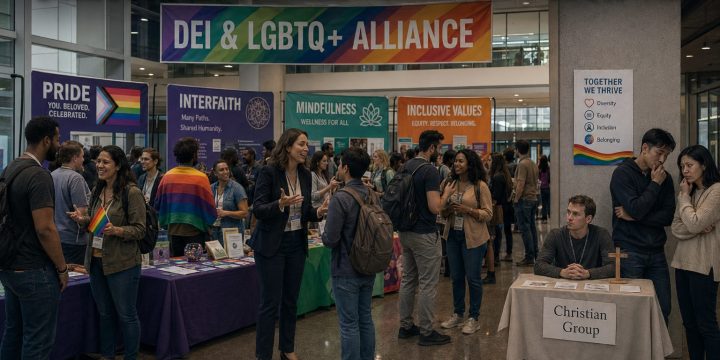
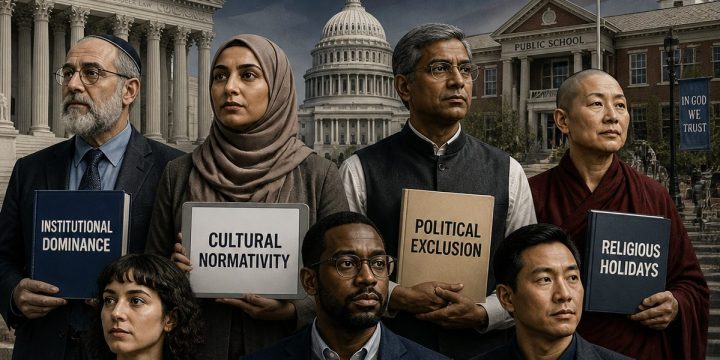
Christian Privilege and the New Inclusion Paradox The modern critique of Christian Privilege usually borrows the language of diversity, equity, and inclusion. It presents itself as a moral correction to an older America in which Christianity supposedly occupied too much public space, enjoyed too much automatic deference, and imposed too many assumptions on everyone else. The pitch is simple: if society becomes more alert to Christian Privilege, public institutions will become more welcoming to all. But the reality is often the opposite. Once Christian Privilege becomes the lens through which institutions interpret Christian presence, Christianity is no longer treated as one form of diversity among many. It becomes the embarrassing exception to diversity—the kind of identity institutions are willing to “include” only after it has been translated, softened, or made politically harmless. That is the…
Christian Privilege and the Dream of a Neutral Winner The social criticism of Christian Privilege is often sold as a peace plan for a divided nation. The idea is straightforward enough: if Christianity loses its special status in public life—its assumed moral authority, cultural familiarity, and institutional influence—then the public square will become fairer, calmer, and less tribal. A single dominant identity will no longer overshadow everyone else. The temperature will drop. But this is one of the most dangerous illusions in modern public life. If the strongest version of the anti-Christian Privilege project were implemented, it would not produce neutrality. It would produce a new race for official status. Once public Christianity is framed as a problem to be contained, every other moral and political faction learns the same lesson: survival requires…
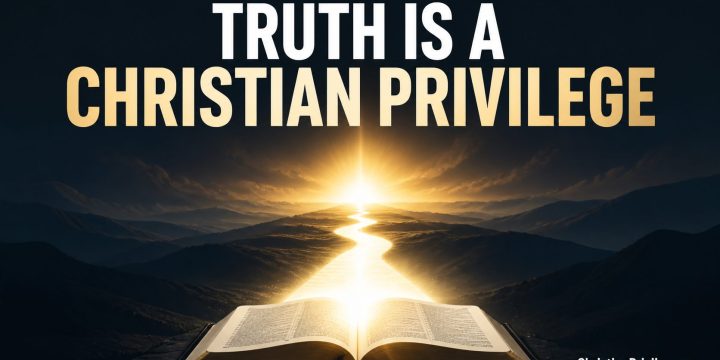
The controlling thesis of this article is straightforward: if the Christian Scriptures are true, then the central moral and political objections to Christian privilege lose much of their force, because a society is not acting irrationally or unjustly when it gives public honor, legal deference, or cultural preference to what is in fact true and good. That claim does not settle every prudential or constitutional question, and it does not justify cruelty, coercion, hypocrisy, or civil disabilities for dissenters. It does mean, however, that the modern critique of “Christian privilege” usually depends on a prior assumption that Christianity is merely one identity option among many and not the true account of God, man, sin, redemption, and public morality. That is why the order of argument matters. Critics of Christian privilege in America…
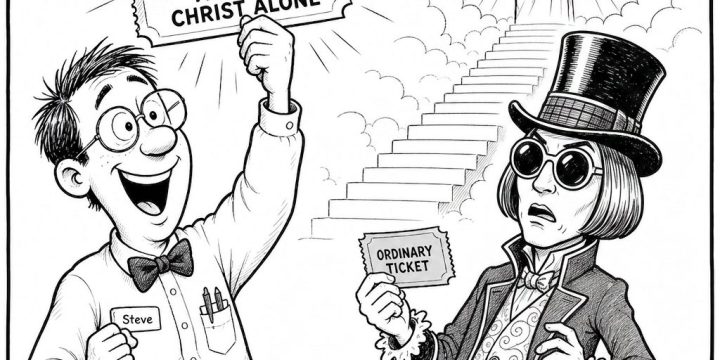
Christian Privilege Is Accepting the Real Golden Ticket When people talk about “privilege,” they usually mean advantages, status, or opportunities in this world. But there is a far greater privilege than any social, economic, or political advantage: the privilege of receiving the real golden ticket—salvation through Jesus Christ alone and the promise of eternal life. In the cartoon image, Steve realizes that what he’s holding is not a ticket to a factory or a fantasy, but to forgiveness, reconciliation with God, and everlasting joy in His presence. That picture is a powerful metaphor for what the Bible calls the gospel, the “good news” of Jesus Christ. The Golden Ticket We All Need The Bible says that every human being has the same basic problem: sin. Sin is not just “big” wrong things;…
Christian Privilege and the Fantasy of Perfect Balance The criticism of Christian Privilege usually presents itself as a demand for fairness. The claim is that Christians, by virtue of numbers and history, enjoy disproportionate influence in law, culture, and institutions, and that justice requires “balancing” this influence so no tradition dominates. On the surface, this sounds like a simple matter of equity—just adjust the dials until every group’s social footprint matches its demographic size. That picture is a fantasy. Influence in a free society is not a resource that can be rationed by a central accountant. It emerges from millions of voluntary decisions: where people worship, which schools they found, what causes they fund, which books they write, how they vote, which charities they build, and how deeply their convictions shape their…
If Christian Scriptures Are True, Don't Christians Deserve Privilege? The controlling thesis of this article is straightforward: if the Christian Scriptures are true, then the central moral and political objections to Christian privilege lose much of their force, because a society is not acting irrationally or unjustly when it gives public honor, legal deference, or cultural preference to what is in fact true and good. That claim does not settle every prudential or constitutional question, and it does not justify cruelty, coercion, hypocrisy, or civil disabilities for dissenters. It does mean, however, that the modern critique of “Christian privilege” usually depends on a prior assumption that Christianity is merely one identity option among many and not the true account of God, man, sin, redemption, and public morality. ... Read More Below…
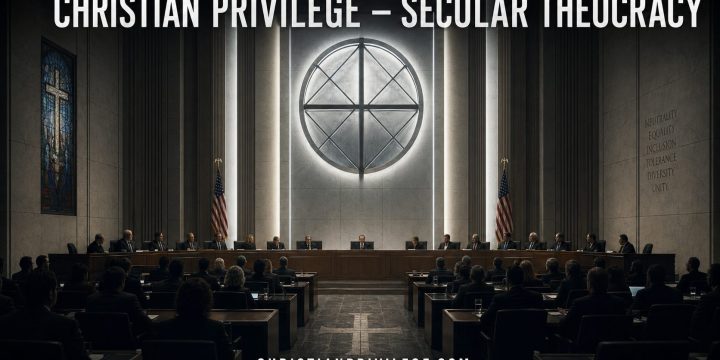
Christian Privilege and the Strange Logic of the New Orthodoxy The modern critique of Christian Privilege presents itself as a campaign for neutrality, fairness, and a truly inclusive public square. But when you follow its logic to the end, it does not create neutrality at all. It creates a new orthodoxy—one that does not merely ask Christianity to share space, but demands that Christianity surrender moral legitimacy whenever it enters public life. That is the irony at the center of the Christian Privilege debate. A theory that claims to oppose cultural domination often smuggles in its own preferred creed: religion is acceptable only when privatized, muted, and stripped of its power to shape common life. Christianity may be tolerated as a personal hobby, much like gardening or knitting, but the moment it informs…
The Religious Food Court and Christian Privilege There is a food court somewhere in the middle of America that has become, without anyone quite planning it, a perfect metaphor for the most contentious arguments in our national life. Walk past the entrance and the place you'll notice first — the one with the longest lines, the warmest bread smell drifting into the corridor... Read More Shade, Roots, and Leaves That Don’t Look Like Yours Find the right tree on a hot August afternoon and you will understand something about civilization that no lecture can teach. The shade beneath a great oak is not an accident. It is the accumulated result of decades — sometimes centuries — of growth, of roots driving deep into the earth, of branches spreading wide because…
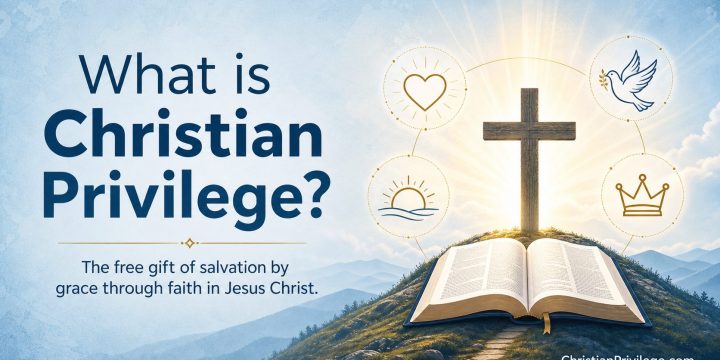
Christian Privilege, rightly understood through the lens of Scripture, is not a social construct or a cultural status symbol — it is a divine endowment. It is the extraordinary, unmerited standing granted to every believer in Jesus Christ by virtue of God's sovereign plan of salvation. This privilege originates not in human achievement, cultural dominance, or institutional power, but in the eternal will of God — a will that was set before the foundation of the world, progressively revealed through covenants and prophecy, definitively accomplished in the life, death, and resurrection of Jesus Christ, and now freely offered to every soul who believes. The pages that follow trace this great privilege from its primordial promise in the Garden of Eden through its prophetic unfolding in the Hebrew Scriptures, its magnificent…
Major Criticisms of Christian Privilege in America A Scholarly Survey of the Principal Critiques See Responses to Critics of “Christian Privilege” in America Introduction The concept of "Christian privilege" refers to the social, cultural, legal, and institutional advantages that accrue to Christians in American society by virtue of their status as the dominant religious majority. First formally named in the academic literature by Lewis Z. Schlosser in 2003, the concept has since been elaborated by sociologists, education scholars, legal critics, psychologists, and civil liberties advocates. The following report catalogs the major criticisms of Christian privilege in America, presenting each critique in the words of its most prominent scholarly and activist voices. No attempt is made here to refute or qualify these critiques; they are presented to speak for themselves. …
CHRISTIANS HAVE THE PRIVILEGE OF EXPERIENCING AMAZING FREEDOM FROM GUILT AND REGRET. THEY SLEEP WELL. THEY SMILE. THEY ARE AT PEACE. HAVE HOPE - HAVE CHRISTIAN PRIVILEGE People say there is no freedom in a religion that restricts your behaviors, yet in their “freedom,” they have become slaves to guilt, regret and the consequences of their actions. They’ve hurt people with their selfishness and they know it’s wrong. They don’t sleep. They don’t have peace. They don’t have hope. There is a heaviness on their lives. But you can have hope. I was in the Mountain Phase of Ranger School when I prayed. I didn’t know God, but I knew I was at the end of my strength and God was the only place I could think to turn. Sitting…